
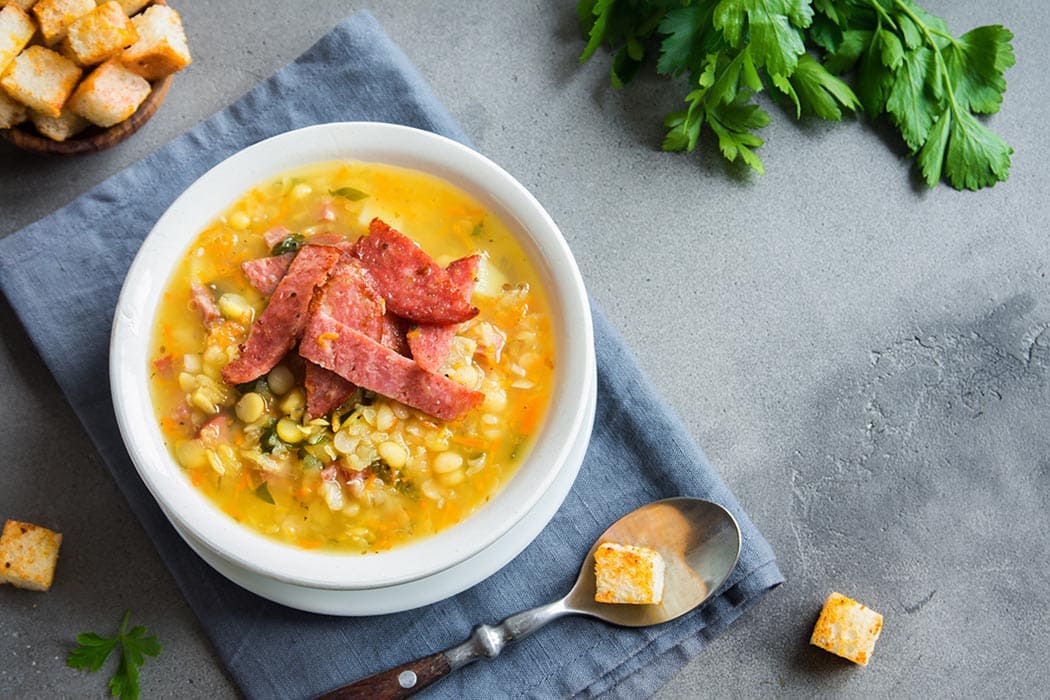
Yellow pea soup, a staple of many cuisines, has a rich history that stretches back centuries. Originating in ancient civilizations, it has evolved into various delightful forms worldwide. Yellow pea and ham soup, a beloved variant, showcases the versatility of this humble legume. Whether served thick or thin, spiced or simple, yellow pea soup remains a comforting dish for many.
Pea soup has roots in European, Middle Eastern, and Asian cuisines, dating back to 500-400 BC. In ancient Greece and Rome, street vendors sold hot pea soup to the masses. The dish gained popularity in Scandinavia, the UK, and Germany during the Middle Ages. In Sweden, “ärtsoppa” (yellow pea soup) became a Thursday tradition, often served with pancakes.
Types of Pea Soups
Pea soups come in various forms, each with unique characteristics. While green peas are often used, yellow peas offer a distinct taste and texture. Green pea soup tends to be sweeter and fresher. In contrast, yellow peas have a richer, earthier flavor, making them ideal for heartier soups like yellow pea and ham soup or the exotic curried split pea soup.
The Special Appeal of Yellow Peas
Yellow peas, or Pisum sativum, belong to the legume family. These peas are split, dried, and hulled, resulting in a nutritious and flavorful ingredient. Yellow peas are high in protein, fiber, and essential vitamins and minerals. Their mild taste and creamy texture when cooked make them perfect for creating a soothing and filling soup.
Yellow pea soup varies widely depending on regional preferences. In Canada, it’s often made with ham, providing a smoky depth. In India, curried split pea soup incorporates spices like turmeric, cumin, and coriander, transforming it into a fragrant and vibrant dish. Each variation highlights the adaptability of yellow peas, allowing them to shine in different culinary contexts.
Cooking Techniques
Cooking yellow pea soup is simple yet rewarding. The peas must be rinsed and soaked before cooking to ensure even and faster cooking. A sturdy pot or Dutch oven is ideal for preparing this soup. These pots distribute heat evenly and retain warmth, helping to break down the peas into a creamy consistency. Slow cookers and pressure cookers are also excellent choices for making this dish.
The beauty of yellow pea soup lies in its adaptability. Adding ham or bacon imparts a smoky flavor that pairs perfectly with the earthiness of the peas. Vegetables like carrots, celery, and onions add sweetness and depth. For a twist, try curried split pea soup, spiced with ginger, garlic, and chili for a warming and aromatic meal.
Creating yellow pea soup at home is easy and satisfying. Here’s a basic recipe to get you started:
INGREDIENTS :
– 1 cup dried yellow split peas
– 1 ham bone or 1 cup diced ham
– 1 onion, chopped
– 2 carrots, chopped
– 2 celery stalks, chopped
– 2 garlic cloves, minced
– 1 bay leaf
– 6 cups chicken or vegetable broth
– Salt and pepper to taste
INSTRUCTIONS :
1. Rinse and soak the yellow split peas in cold water for at least 4 hours or overnight.
2. In a large pot or Dutch oven, sauté the onion, carrots, celery, and garlic until soft.
3. Add the soaked peas, ham bone or diced ham, bay leaf, and broth to the pot.
4. Bring to a boil, then reduce heat and simmer for 1.5 to 2 hours, stirring occasionally.
5. Remove the ham bone (if used), chop the meat, and return to the soup.
6. Season with salt and pepper to taste.
7. Serve hot, garnished with fresh herbs if desired.
Yellow pea soup is a testament to the enduring appeal of simple, nourishing food. From the ancient streets of Rome to modern kitchens worldwide, this versatile dish continues to warm hearts and homes. Whether you prefer the classic yellow pea and ham soup or the spicy kick of curried split pea soup, there’s a version for everyone to enjoy. With a few basic ingredients and a sturdy pot, you can create a comforting and delicious meal that celebrates the humble yellow pea. For other deliciously creamy feel-good soup ideas; take a look at my post The Comfort of Chowders: A Journey Through History and Flavors.